
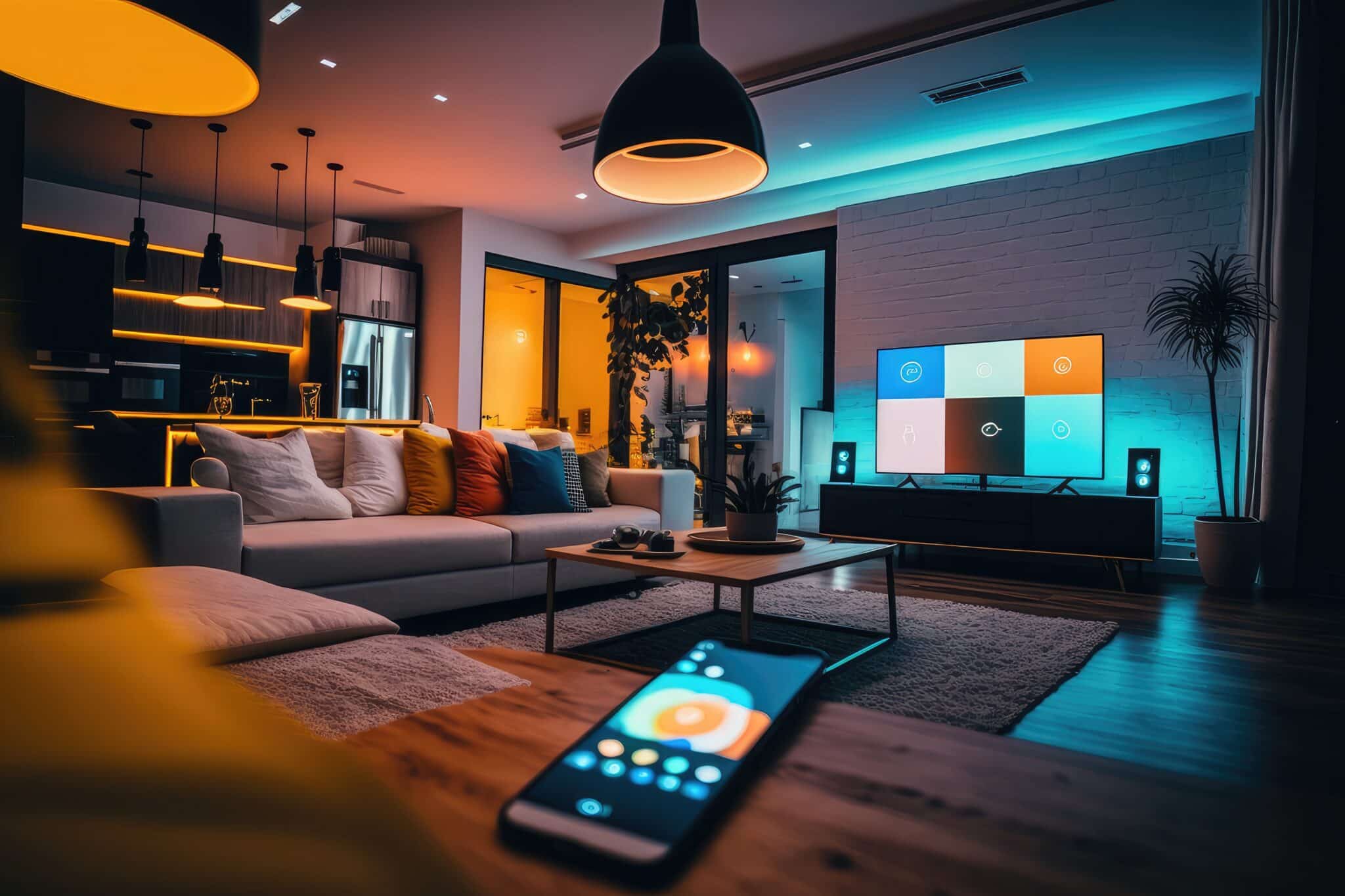
Lighting has developed much further than the on and off capability. With the smart lighting systems, the way individuals engage with their living environment is currently changing. These solutions are convenient and efficient as they allow one to adjust the brightness using a phone or design mood-based lighting. Among the most popular products in this category, one should mention the LED smart light bulb that will combine energy-saving features with smart control.
What is a Smart LED Light Bulb?
A LED smart light bulb is an enhanced light product which can be remotely operated either with a smartphone, voice assistant or an automation system. It can also be connected via WiFi or Bluetooth unlike the traditional bulbs, enabling the user to manually control the brightness, color and timing without the need to touch a switch.
These bulbs are made in the light of LED technology, which is, in itself, much less consuming than conventional lighting. Besides that, smart lighting features have added flexibility and customization, which is why they are a favorite in contemporary households.
The Reason Behind the Popularity of Smart Lighting
Intelligent lighting has never been as important as it is currently because of the increasing use of smart homes. People are seeking solutions that do not only save on energy, but also increase comfort and convenience.
Smart bulbs enable one to regulate the lighting remotely which is particularly useful when one is not at home. They also have the capability of being programmed to switch on or off at definite times enhancing security as well as energy savings. The models have several models that accommodate millions of color options and pre-built lighting scenarios, making it possible to set up various moods to suit various occasions.
Moreover, smart lighting systems are commonly connected to voice assistants, so one can easily turn on and off lights with a few words.
Important Characteristics to Consider
There are some key features to be taken into account when selecting a smart lighting solution.
Connectivity Options
There are bulbs that utilize WiFi, others are based on Bluetooth or need a hub. WiFi bulbs have a remote access, whereas Bluetooth is typically reduced to shorter ranges.
Luminance and Color Gamut
Brightness is expressed in lumens with the high value representing more intense light output. Some of the intelligent bulbs even have programmable color temperatures or RGB color.
Compatibility
It is also necessary to make sure that the bulb is compatible with your current smart home setup, be it Google Assistant or Alexa, among other apps.
Energy Efficiency
Smart bulbs that use LED consume less energy and last longer as opposed to the traditional bulbs, which make them more sustainable in the long term.
Control and Automation
Scheduling, timer, and scene settings are some of the features that enable users to automate lights in accordance with their daily activities.
Everyday Use Cases
Smart lighting is applied differently based on the lifestyle and environment.
It is widely applied in homes to provide various ambiences in living rooms, bedrooms, and kitchens. In this case, warm lighting is applicable in situations where one wants to relax whereas bright white light would be suitable when one wants to work or study.
Smart bulbs are effective in offices because they can be used to enhance productivity by creating adjustable lighting conditions during the day. Color changing lights can also be used in entertainment systems to make the experience more enjoyable and vibrant with music or images.
Benefits Beyond Convenience
Although convenience is a significant gain, smart lighting has useful gains as well.
Energy saving is one of the advantages. LED smart bulbs are economical in use and can be programmed to save on the power usage in the long run.
The other advantage is enhanced security. It is possible to set lights to be turned on even in the case when nobody is at home making it seem that the area is used by someone.
Lighting is also smart and helps in managing life better. An example is turning on some lights in the morning to imitate the sunrise, and turning them off in the evening to induce relaxation.
Some of the most Common Errors to be Avoided
Although they have these benefits, most users with smart lighting have errors during installation.
The most frequent problem is the selection of a bulb that is not compatible with the available devices or applications. The other error is neglecting network requirements that may influence the performance in the case when the connection is unstable.
Placement is also disregarded by some users. The installation of smart bulbs in places that have manual switches that are often switched off can also break the connection since the bulb will require power at all times to be used.
Is It Worth the Investment
Compared to conventional bulbs, smart lighting bulbs tend to be costly, but they provide long-term benefits in terms of energy conservation, comfort, and sophistication. The cost is different in terms of brand and functionality and simple models are cheap and expensive models have more complex controls.
The investment can usually pay off for users that appreciate automation and customization.
Conclusion
Smart lighting is no longer a luxury home. It has become an effective way of living in the present day world, providing a blend of efficiency, flexibility and convenience. The LED smart light bulb can change the way you experience lighting in your home or work place and you will find it easier to perform common tasks and it will add comfort.
With the knowledge of major characteristics and the selection of the appropriate configuration, users can make the most out of what smart lighting has to offer.