A renovation does not end when the last tool is packed away. Months or years later, you may need to know which paint was used, where a pipe runs, when an appliance was installed, or what work a contractor completed. Keeping a clear record during the project makes maintenance easier, supports future repairs, and gives you reliable information if you sell the property. A simple system, started before construction begins, can save time and prevent avoidable guesswork.
Set Up a Project File Before Work Starts
Choose one place for the information, whether that is a labeled binder, a folder on your computer, or a cloud-based system you can access from a phone. Organize it by room or work type, and use the same structure for paper and digital copies. For example, a kitchen renovation might have sections for contracts, permits, electrical work, plumbing, finishes, receipts, and product manuals.
Save signed agreements, estimates, change orders, inspection documents, and receipts as they arrive. Add the date and a short description to digital file names, such as “2025-04-12 bathroom tile invoice.” This is more useful than a camera roll or downloads folder filled with files whose purpose is unclear. Keep original paperwork where possible, especially for warranties and permits.
Record the Existing Conditions
Before demolition, take clear photographs of each room from several angles. Include close-ups of visible damage, existing fixtures, and areas that will be covered by new work. Photograph utility shutoffs, electrical panels, and the locations of important equipment. These images can help resolve questions about the original condition of the property and provide a reference if a future repair requires access behind a finished surface.
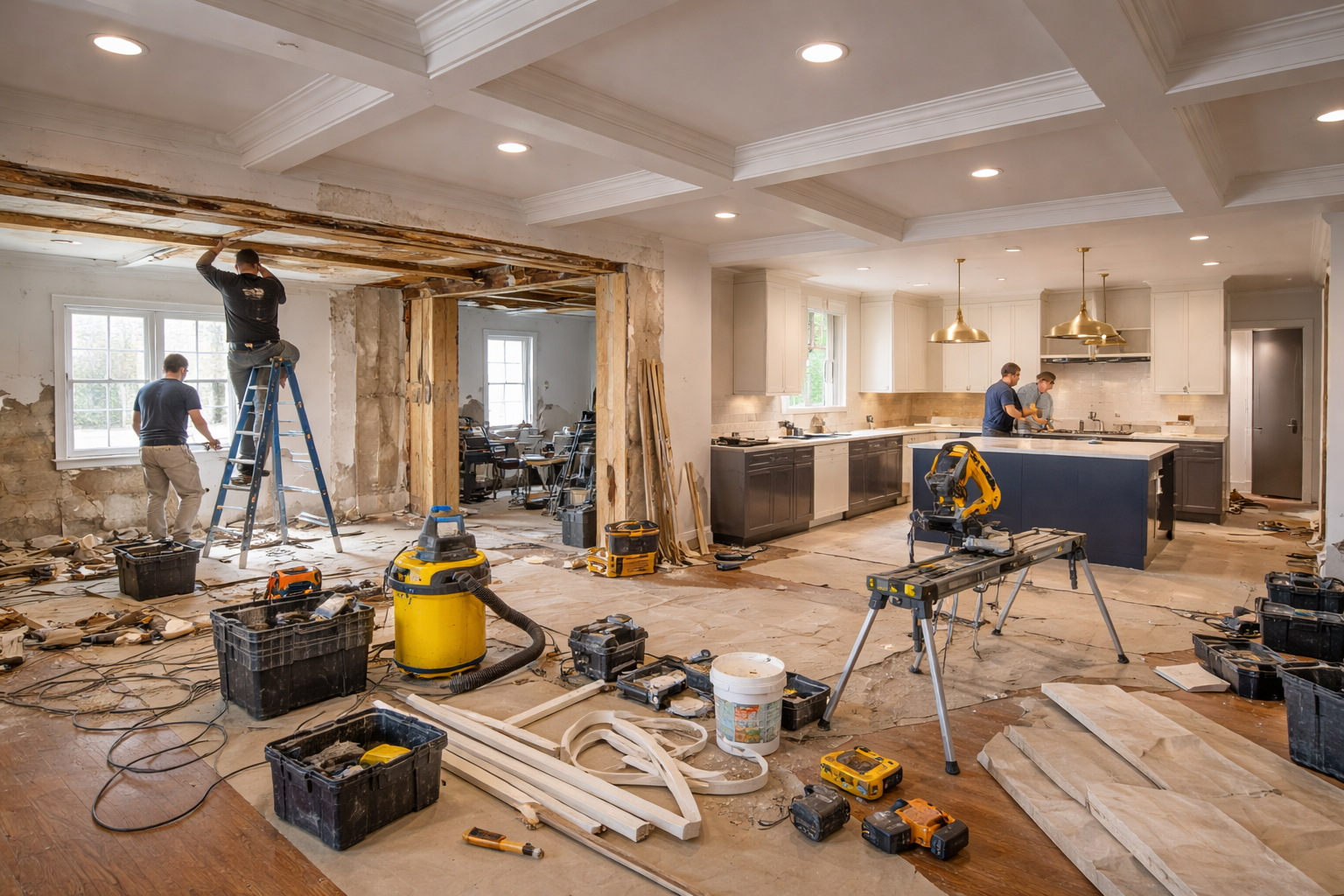
During construction, take additional photos before walls, ceilings, or floors are closed up. Capture the routes of wiring and plumbing, framing changes, insulation, and any repairs made to the structure. Place a tape measure in a picture when a distance matters, and note the room and wall. Do not rely on photographs alone: add a brief written description, since a close-up may not show where the feature is located.
Keep Track of Decisions and Changes
Renovation plans often change once work begins. A material may be unavailable, an inspection may require an adjustment, or an unexpected problem may alter the schedule. Record what changed, who approved it, when it happened, and whether it affected the cost or completion date. Make sure any change to the agreed scope is confirmed in writing with the contractor rather than left as a verbal understanding.
Keep a running list of selected products, including manufacturer, model number, color, finish, and supplier. For paint, note the brand, shade, and sheen; for flooring or tile, record the product name and order details. Store a small labeled sample when practical. This makes it easier to match a finish after damage and helps a future owner identify replacement parts.
Make the File Useful for Maintenance
When work is complete, gather warranties, care instructions, manuals, permit sign-offs, and final inspection records. Note the installation date for major appliances, roofing, windows, heating equipment, and other components with service needs. Add reminders for routine tasks, such as changing filters or checking sealant, while following the manufacturer’s guidance for each product.
Write a short handover sheet with the location of shutoffs, the names of materials used, and any details a new occupant would need to operate or maintain the home. Keep sensitive information, such as alarm codes or account passwords, out of a general renovation file. If you are preparing the property for sale, an organized record can help answer buyer questions and make the home’s improvements easier to explain, without promising that every upgrade will increase its market value.
Share What You Learn
A renovation record can also help other homeowners make better decisions. A useful account focuses on specific lessons: how long a permit took, what caused a schedule change, which details were missed in an estimate, or how the finished layout works in daily life. If you want to contribute that experience to a broader audience, learn about guest posting and the expectations publishers may have for practical, original articles. Remove personal details from photographs and get permission before sharing images that include workers or other people.
Clear diagrams, edited photographs, or a concise maintenance guide can make those lessons easier to understand. If you need help creating them, a freelance marketplace such as Osdire lets buyers find services across categories including design, writing, photography, and translation. Its flat pricing has no hidden fees, and payment is held securely during an order and released after the delivered work is approved. As with any freelancer, agree on the scope, file formats, deadlines, and image rights before work begins.
Conclusion
Good renovation records do not need to be elaborate. A well-organized folder, dated photographs, written notes about changes, and a final set of manuals and warranties are enough to create a dependable history of the work. Build the habit while the project is underway, when details are easy to confirm. The result is a home that is simpler to maintain, easier to repair, and better documented for whoever lives there next.